Protocols & Photons
This case brings together two small tests around a simple question: how can lighting control become part of a realtime stage image?
I was exploring whether media surfaces and lighting could eventually be brought together in a previs that helps clients see both at once. These are far from finished tools — just two practical steps in that direction.
the touch
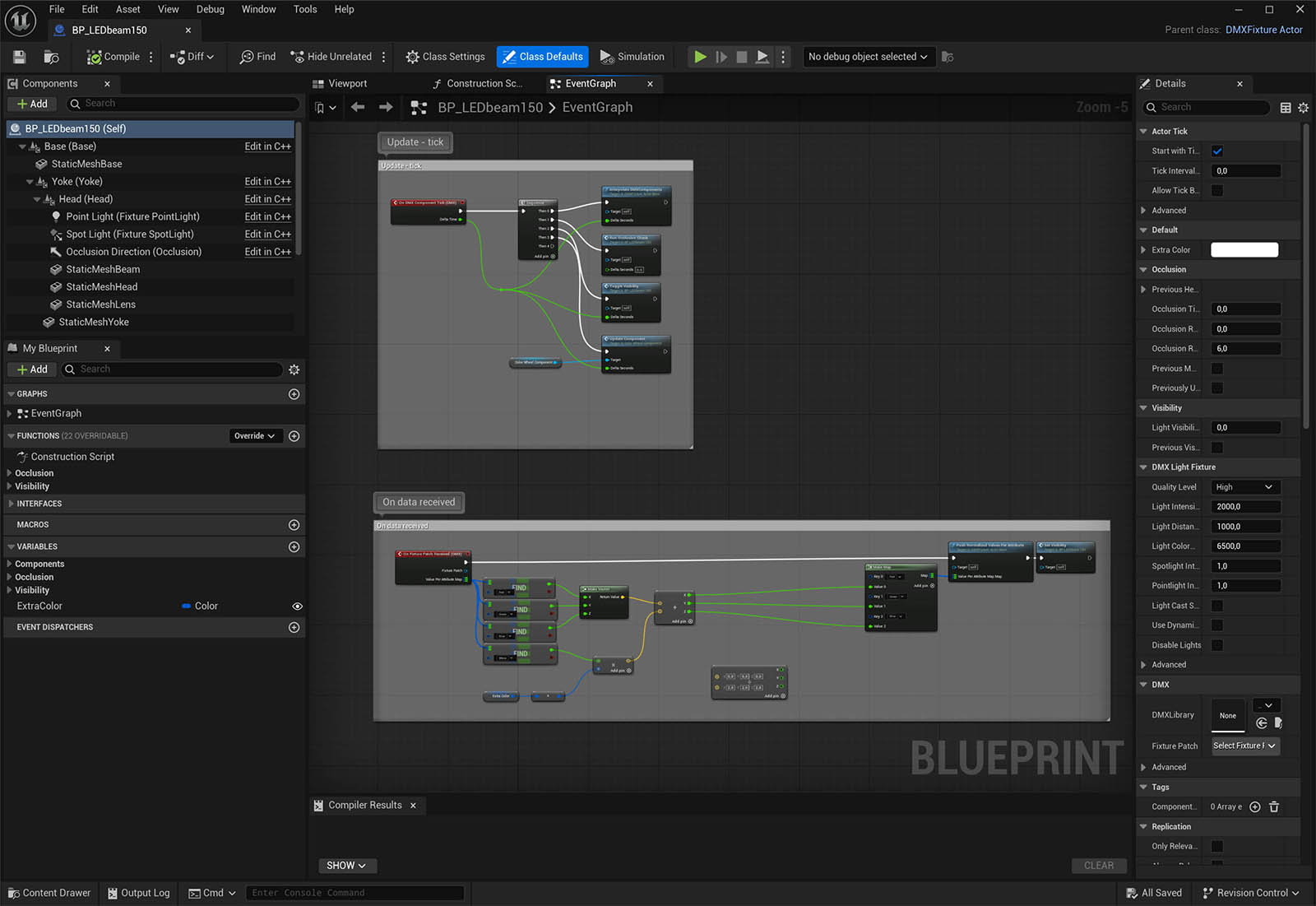
For the first test, I connected a custom iPad interface built in Synthien to a generic virtual moving head in Unreal Engine.
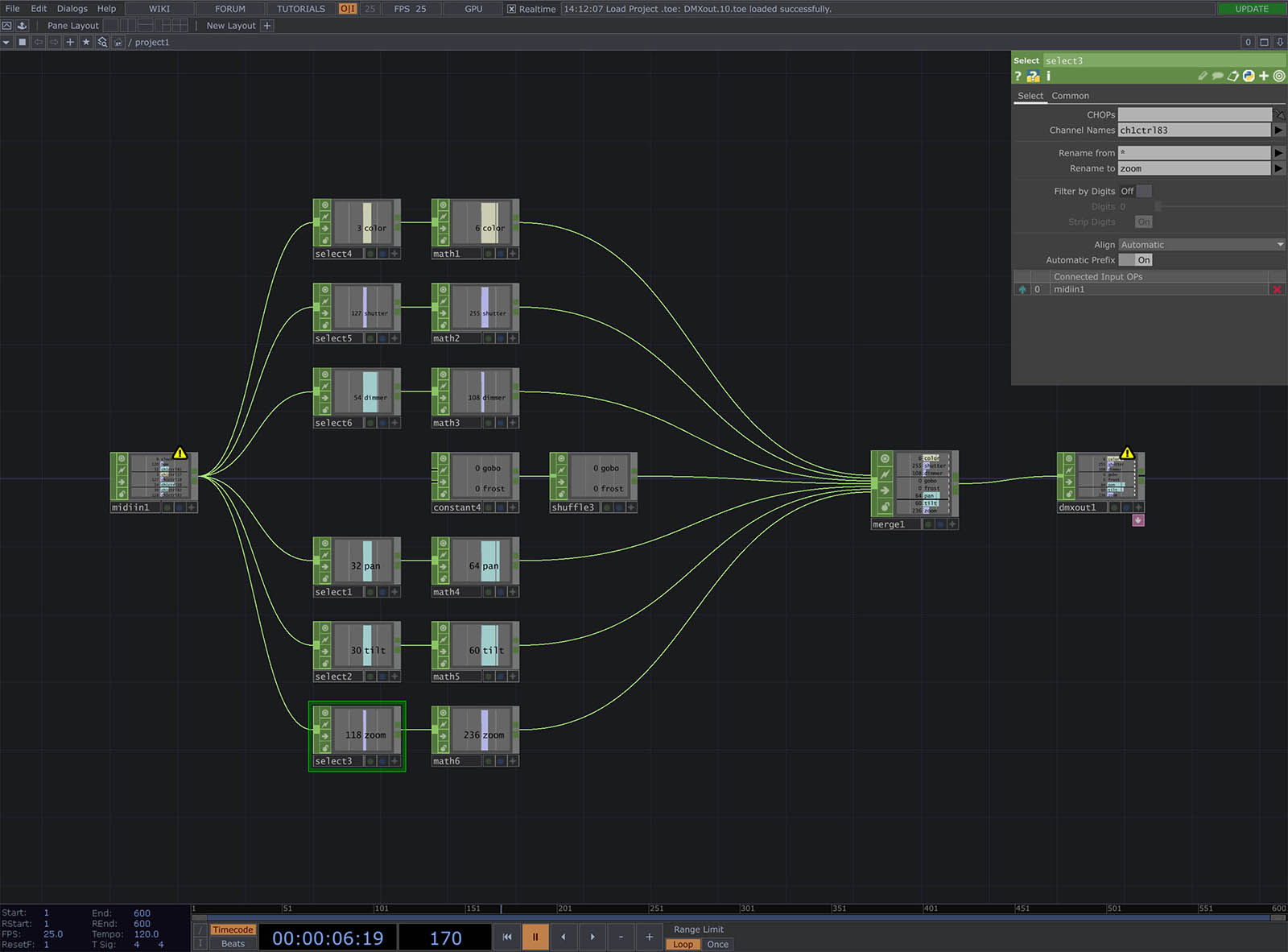
MIDI values from the iPad entered TouchDesigner, where I mapped them to DMX channels and sent them via Art-Net. Unreal received the data and applied it to the fixture: position, intensity and color could all be controlled from the tablet.
The individual parts of this chain are well established. I wanted to keep the signal path visible — an input on the iPad becoming a change in light on a virtual stage.
the stage
For the second test, I rebuilt the lighting rig from Oper für Alle (Opera for All) at BMW Park in Munich as a virtual setup in Unreal Engine. The fixtures and their positions followed the real event rig, with GDTF files providing the basis for the virtual fixture profiles.
I programmed a short, deliberately simple sequence in ChamSys MagicQ and sent its DMX data into Unreal.
The technical connection worked quite quickly. Learning MagicQ’s interface and way of working was the steeper part of the experiment for me.
The same shape also ran through the official BASSart teaser, produced by ÜberEck. When it played on the projection surface, the physical construction, the mapped layers and the animated pyramids came together in one space.